
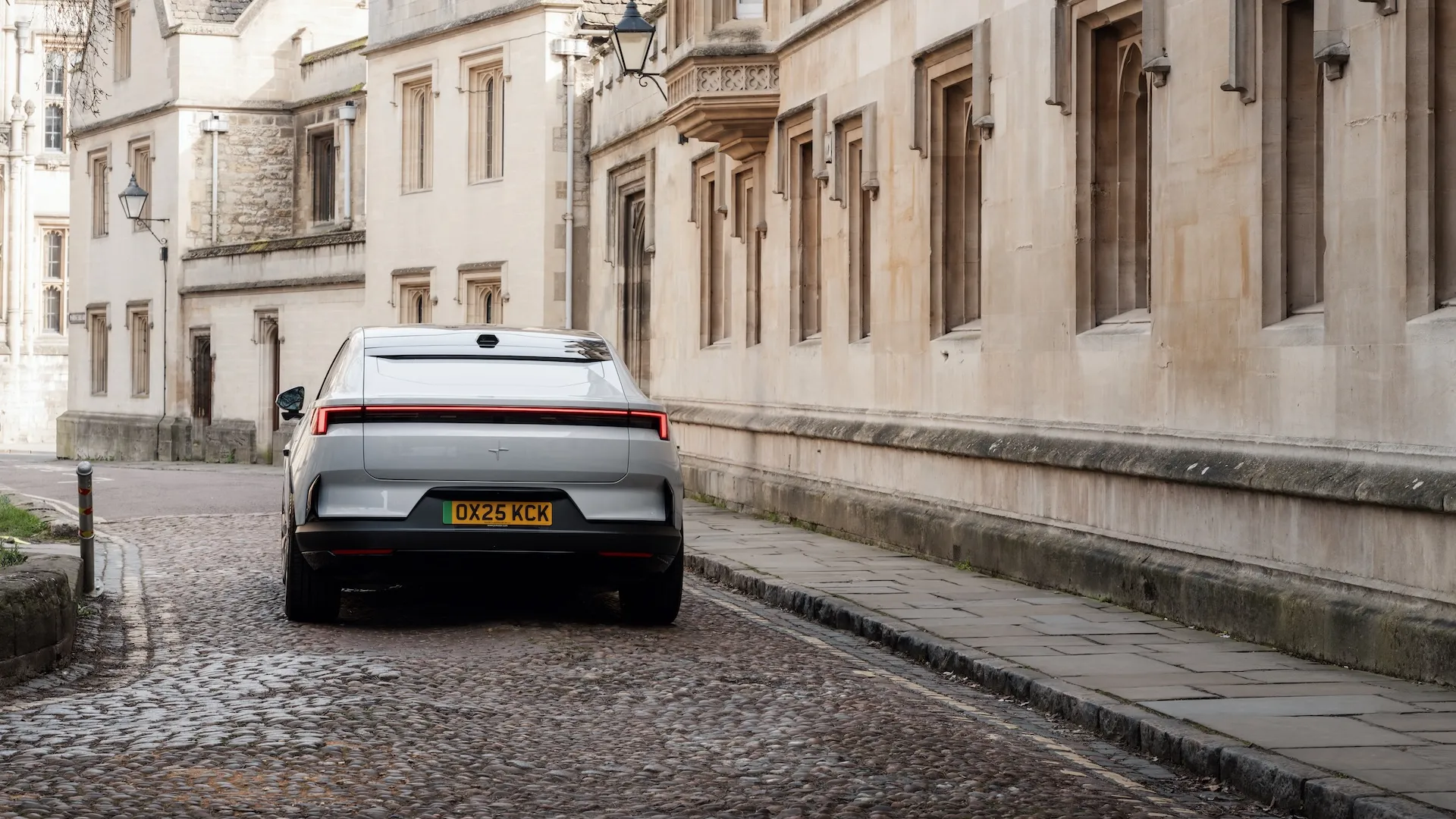
Polestar and the University of Oxford’s SDG Impact Lab have launched a pilot research study to determine whether the thrill of driving can be scientifically defined and measured, the partners announced on May 19, 2026. The collaboration will analyze physiological, cognitive, and behavioral responses while participants drive a high-performance Polestar 5, combining brain activity readings with biometric and behavioral data to investigate whether the sensations linked to driving excitement can be observed and quantified. The pilot is led by six senior Innovation Fellows pursuing doctoral degrees at Oxford, supported by senior academics and Polestar engineers.
Highlights
- Joint pilot study between Polestar and the Oxford SDG Impact Lab aims to scientifically define and measure the thrill of driving.
- Research draws on engineering science and experimental psychology and is conducted by six senior Innovation Fellows pursuing PhDs at the University of Oxford.
- Study runs from March 9 through July 31, 2026, with on-track testing at the Gotland Ring in June.
- Long-term ambition is a measurable framework for driving thrill that can inform future vehicle development and EV performance benchmarks.
Redefining Performance Beyond the Spec Sheet
As electric cars become commonplace, traditional performance benchmarks such as engine sound and 0-60 times have become less central to how drivers describe excitement. Polestar and the SDG Impact Lab are exploring a more holistic definition of modern performance that reflects the emotional and experiential qualities of driving.
The study challenges the long-held assumption that driving excitement depends on engine sound. Instead, the partners are investigating how electrification may open new approaches to performance development, with the broader aim of reshaping consumer perceptions of EV performance to support the energy transition.
Method and Disciplines
The pilot brings together expertise from engineering science and experimental psychology. Six senior Innovation Fellows have been recruited to conduct the research as one multidisciplinary team, with academic oversight from Oxford and technical input from Polestar’s engineering organization.
By examining brain activity alongside biometric and behavioral signals during driving, the team aims to determine whether the sensations associated with driving excitement can be observed, analyzed, and quantified. The research question sits at the intersection of human neuroscience, sensory perception, and vehicle dynamics — a combination Polestar says could give engineers a new data layer for tuning vehicle behavior.
Christian Samson, Head of Product Attributes at Polestar, said: “At Polestar we’ve proven to be a guiding star in design and sustainability, now it’s time to lead with performance, by challenging conventions around straight-line acceleration being the default measure of driving excitement. The scientific approach of this research promises real-world benefits for our customers, as the data can be used by our engineering team as an added layer for fine tuning our cars’ vehicle dynamics and performance attributes.”
Prof Alexander Betts, Pro-Vice Chancellor and Co-Founder of the Oxford University SDG Impact Lab, said: “This project demonstrates how academic research can create real-world impact beyond the university. Working with Polestar allows us to translate scientific insight into knowledge that can help shape future innovation.”
The Vehicle: Polestar 5
The pilot uses the Polestar 5, the brand’s recently launched four-door Grand Tourer and its most performance-focused product to date. The car is built on the Polestar Performance Architecture, a bonded-aluminum platform engineered for low weight and precise response. Traction control, suspension, brake setups, and bespoke tires are positioned by the company as supporting hardware for the broader driving-feel program the research is designed to inform.
Timeline and Outputs
The study runs from March 9 through July 31, 2026. Vehicle testing is scheduled for the Gotland Ring test track in June, and results are planned for presentation in fall 2026 at a dedicated event at the University of Oxford. Polestar will support the initiative with a four-part content series planned for Q3 2026.
Sign up for our popular weekly email to catch all the latest EV news!