
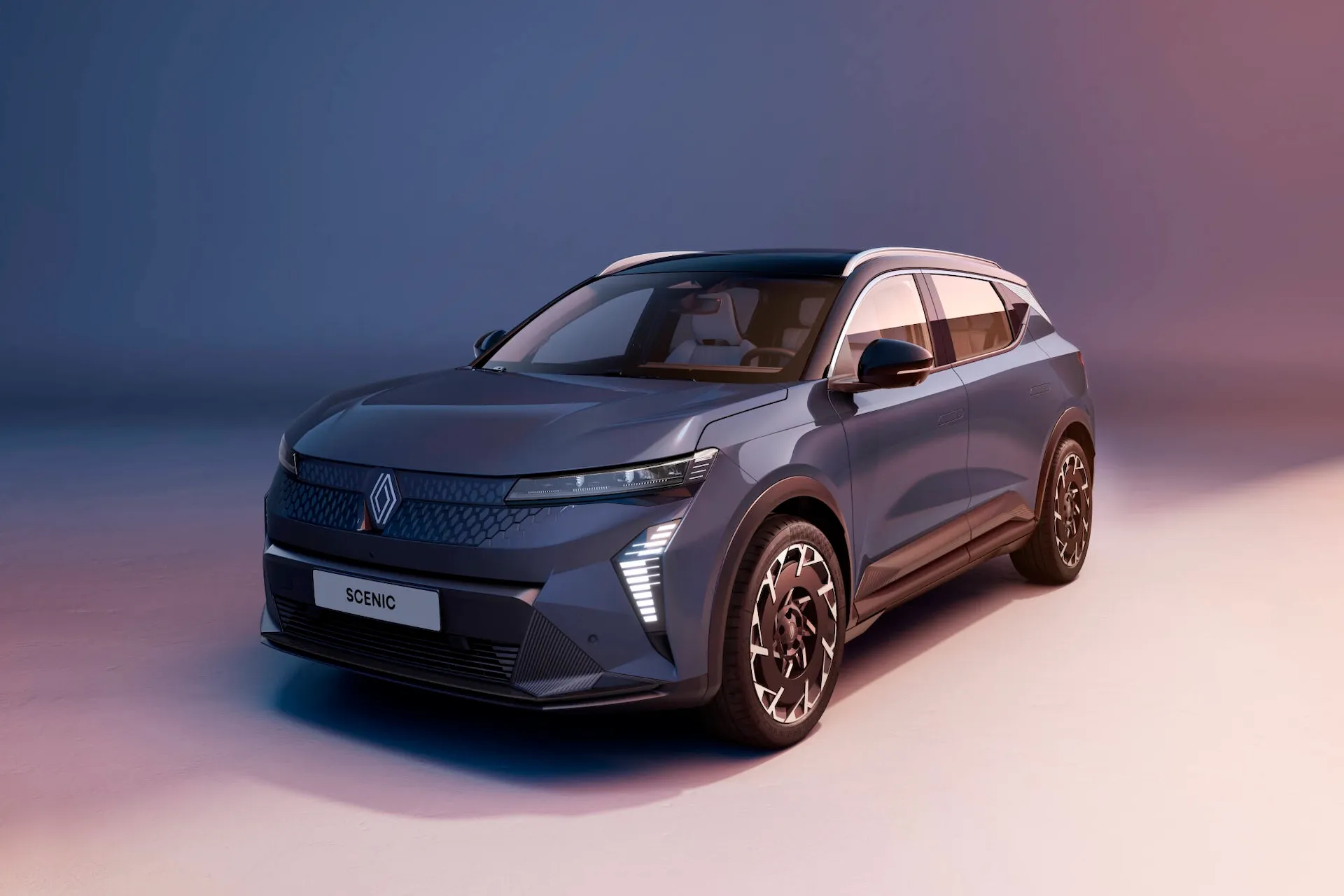
The Renault Scenic E-Tech electric now ships with an 89 kWh NMC battery rated at up to 399 miles (642 km) WLTP, with DC fast charging from 15 to 80 percent in 28 minutes and a French starting price of €38,750 (about $44,950). Renault says the update to its Scenic E-Tech electric also brings a 67 kWh LFP battery due to open for orders in autumn 2026, Google Gemini in the infotainment system, and revised driver assistance. The company reports the long-range version cuts DC charging time by 25 percent, and the crossover remains under 4,189 lbs (1,900 kg) at 176 inches (4.47 m) long. WLTP figures are typically higher than EPA ratings for the same vehicle.
Highlights
- 89 kWh NMC long-range battery: up to 399 miles (642 km) WLTP, 15 to 80 percent DC charge in 28 minutes at a 150 kW peak
- 67 kWh LFP comfort-range battery: up to 290 miles (467 km) WLTP, 15 to 80 percent in 24 minutes at a 165 kW peak, orders opening in France in autumn 2026
- French pricing: Techno long range from €38,750 (about $44,950) or €270 (about $313) per month; Techno comfort range from €31,750 (about $36,830) or €240 (about $278) per month
- Connectivity: Google Gemini as an optional assistant, 2 GB of monthly data for three years, and a Qi2-compliant wireless charger
Two New Batteries Paired With the 220 hp Motor
Both battery options pair with the existing 220 hp motor. The 89 kWh NMC pack is the long-range choice, and Renault states it charges from 15 to 80 percent in 28 minutes at a peak of 150 kW, a 25 percent reduction in fast-charging time.
The 67 kWh LFP pack follows at a later date. Renault rates it at up to 290 miles (467 km) WLTP and says it also trims DC charging time by 25 percent, reaching 80 percent from 15 percent in 24 minutes with peak power raised to 165 kW.
The LFP battery first appeared on the updated Megane E-Tech electric, and Renault positions it as a lower-cost, durable alternative to NMC. It uses the cell-to-pack architecture from that car, which the company describes as a world first: 232 pouch cells packed closely enough to reach 53 percent packing efficiency. The approach traces back to the battery strategy Ampere outlined in 2024, which paired LFP chemistry with pouch-cell cell-to-pack designs.
What Changed Inside and Out?
Renault reworked the cabin trim on all three grades:
- Techno: Front seats and rear bench in a PET fabric with more than 95 percent recycled yarn, combined with a textured coated fabric with at least 12 percent recycled content. The dashboard is finished in carbon black with lightning-bolt topstitching.
- Esprit Alpine: New “spectral titanium” trim shading from black through hues drawn from the light spectrum, with trim parts containing at least 75 percent recycled ABS-PC.
- Iconic: Two interior color schemes remain. The titanium black interior gains a raised cubic grey trim built on a recycled plastic part, while the optional light grey interior pairs with lime wood trim.
Outside, the palette grows to seven colors with the addition of satin slate blue and exo galaxy grey. Front and rear bumper splitters switch to gloss black, and two new 19-inch and 20-inch wheel designs join the range. The aero covers on the 20-inch Iconic wheels contain at least 72 percent recycled material.
Upgraded Driver Assistance and a Smart Drive Mode
Adaptive Cruise Control, which is standard, and the optional Active Driver Assist have been updated with a new Multi Target function that tracks several vehicles at once to better read merging, cutting-in, and slowing traffic. Active Driver Assist adds:
- A sharper “realistic view” display of detected vehicles
- Temporary lateral positioning within the lane, now more responsive and available up to 43 mph (70 km/h)
- Emergency stop assist, which brings the car to a complete stop if the driver does not respond
- A predictive eco-driving function that uses connected maps to anticipate roundabouts, bends, and junctions; Renault says its recommendations can cut energy consumption by up to 6 percent
The Multi-Sense system adds a Smart mode that switches automatically among Eco, Comfort, and Sport based on driving style, delivering Sport response for an overtake and dropping back to Eco in relaxed driving.
Advanced driver monitoring is now standard on every version, using an in-car camera to detect fatigue and distraction. Renault also uses the camera for driver recognition, loading a stored driving position, multimedia, navigation, and mood-lighting profile on entry. Safety Score now folds in alertness detection, and the Safety Monitor is available as a dashboard widget showing real-time tips.
Gemini, Data Plan, and Qi2 Charging
The openR link system with Google built-in gains new route-planning filters in Google Maps, including charging network, charger power output, and payment method. Gemini is offered as an optional alternative to Google Assistant for natural-language requests.
Customers now receive 2 GB of data per month for three years, or until the end of a Mobilize Financial Services lease, for apps downloaded from Google Play. Renault puts that at roughly 40 hours of audio streaming or up to three hours of video. A ventilated magnetic induction charger compliant with Qi2, or MagSafe on iPhone, is also fitted.
Family Accessories and Production
A new accessory range includes a removable storage tray, a double trunk floor with a hidden compartment that creates a flat load surface with the rear seats folded, a foldable second-row storage box, a closed center console organizer with cup and bottle holders, a Handpresso coffee maker for use while charging, a pet car seat and safety lead, and a tow-bar-mounted Aero Cargo Box adding 10.9 cu ft (310 liters) to the 19.2 cu ft (545-liter) trunk.
The Scenic E-Tech electric is built at Renault’s Douai plant in the ElectriCity cluster, where the battery is also assembled using cells produced in Poland. The motor comes from Cléon in Normandy. Renault says the car qualifies for the European battery bonus scheme.
In France, the Techno long range version is available to order now from €38,750 (about $44,950) or €270 (about $313) per month. The Techno comfort range version opens for orders in autumn 2026 from €31,750 (about $36,830) or €240 (about $278) per month. Both prices assume a theoretical maximum “Prime Coup de pouce CEE” incentive of €8,240 (about $9,558).