
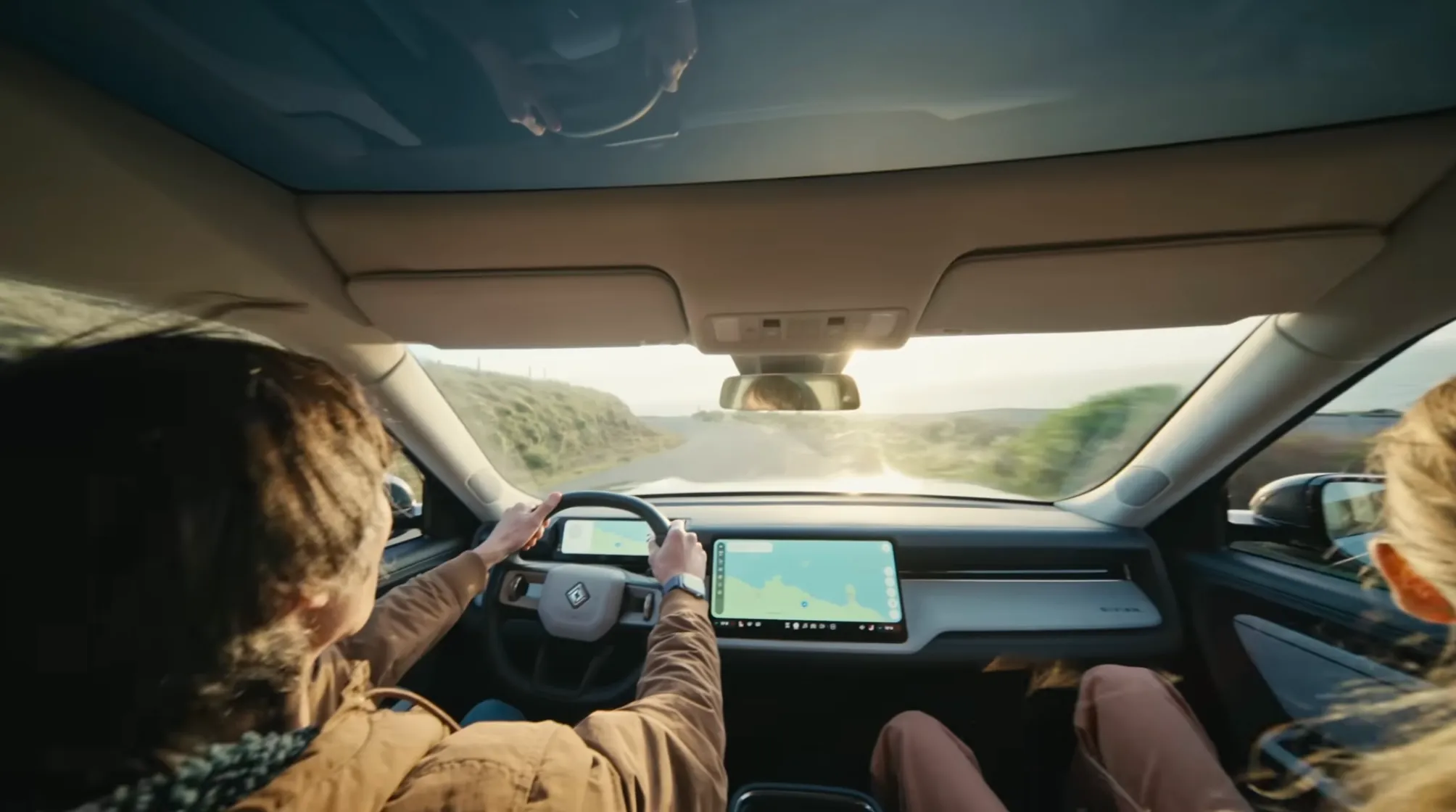
Rivian’s minimalist, button-free R2 cabin was personally chosen by CEO RJ Scaringe over alternatives that included physical controls and exposed cupholders, according to the automaker’s lead interior designer — placing the company against a broader industry shift back toward tactile switchgear. Lead Interior Designer Andrew Morandi disclosed the internal design process in a social media exchange, stating the production direction came “straight from RJ.” More details on the R2 are available at rivian.com/r2.
Highlights
- Senior Lead Designer Andrew Morandi confirmed the R2’s screen-heavy cabin was chosen by CEO RJ Scaringe and Chief Design Officer Jeff Hammoud
- Design team explored concepts with physical buttons, tactile controls, and exposed cupholders before the minimalist direction was selected
- R2 interior retains a 15.6-inch central touchscreen, smaller driver display, and dual gloveboxes — no physical HVAC or volume controls
- Move runs counter to Volkswagen, Porsche, and Hyundai, which are reintroducing physical switches amid EuroNCAP rules penalizing touchscreen-heavy interfaces
Designer Confirms the Direction Came From the Top
Morandi, who joined Rivian from Volkswagen Group in 2022, addressed the design process in a Facebook comment after a user asked whether the “design department won the argument” over hiding cupholders and removing HVAC knobs. According to reporting on the exchange, Morandi responded that the direction came “straight from RJ, an engineer at heart, but very design-minded as well.” He added that his team had developed “various forms of buttons, controls, and static exposed cup holders” during the concept phase, but that Scaringe “always prefers the cleaner / simpler aesthetic.”
Morandi also noted that his early sketches — later selected by Scaringe and Hammoud as the lead theme — became the basis for the production interior. The comments reframe what had been reported as a generic minimalism trend into a documented case of executive preference driving the final product.
What the Production Cabin Delivers
The R2’s production interior centers on a 15.6-inch central touchscreen running Rivian’s in-house software, paired with a smaller digital instrument cluster ahead of the driver. Nearly every vehicle function is routed through the central display, including climate, media, and drive-mode controls. Physical switchgear is limited primarily to steering-wheel scroll wheels and safety-critical controls.
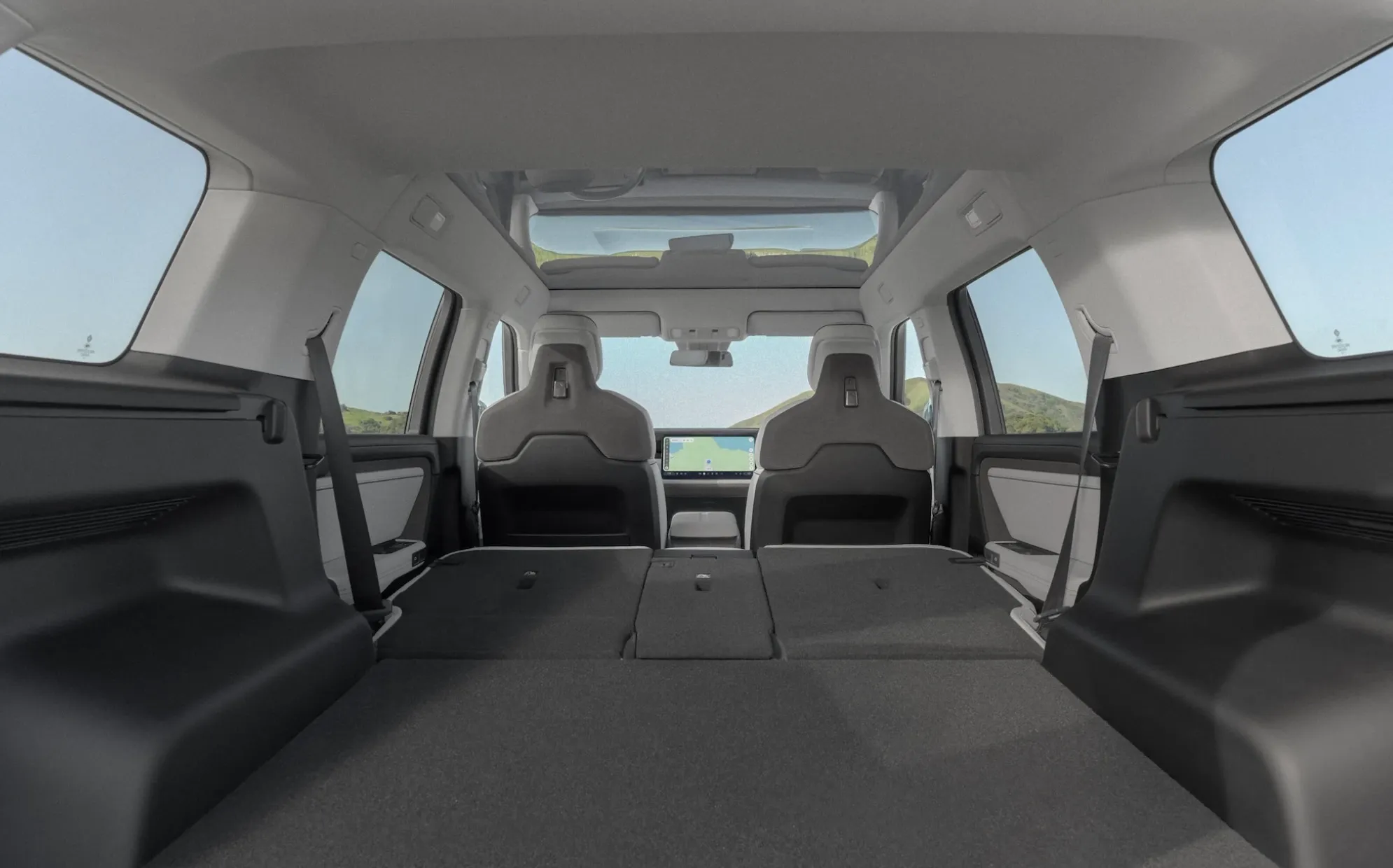
Rivian has retained some practical interior features that address R1 owner feedback. The R2 includes two gloveboxes, a large floor tray between the front seats, a lockable frunk, and a rear window that drops fully into the tailgate. A single control lowers all four side windows and the rear drop glass simultaneously. Interior packaging reportedly delivers more second-row legroom than the larger R1S, supported by a 115.6-inch wheelbase.
Running Against the Industry Trend
Rivian’s position diverges from a widely documented industry reversal on touchscreen-heavy interiors. Volkswagen, Porsche, and Hyundai have all signaled a return to physical controls for climate and audio functions, citing customer complaints and driver-distraction concerns. The EV Report previously covered Volkswagen’s ID. Polo concept cockpit, which reintroduced physical buttons on the steering wheel and HVAC stack.
Regulatory pressure is also mounting. EuroNCAP’s 2026 safety-rating criteria penalize vehicles that route safety-related functions exclusively through touchscreens. Chinese premium EV brand Nio recently unveiled the ES9 with 137 physical cabin buttons as a direct counter-positioning to minimalist rivals.
Context Ahead of Production
The R2 lineup was formally detailed in March 2026, with the Performance trim leading at 656 hp, a 3.6-second 0–60 mph time, and an EPA-estimated range of up to 330 miles. The Standard trim opens at $48,490, with a later variant planned for 2027 at around $45,000. The EV Report’s coverage of the R2 pre-production drive program documented both the interior packaging and the simplified single-chip infotainment architecture now entering production.
The R2 enters a competitive midsize EV SUV segment that includes the Tesla Model Y, Ford Mustang Mach-E, and Hyundai Ioniq 5. Rivian’s Normal, Illinois plant is configured for up to 155,000 R2 units annually. Production is scheduled to begin in 2026.
Sign up for our popular weekly email to catch all the latest EV news!