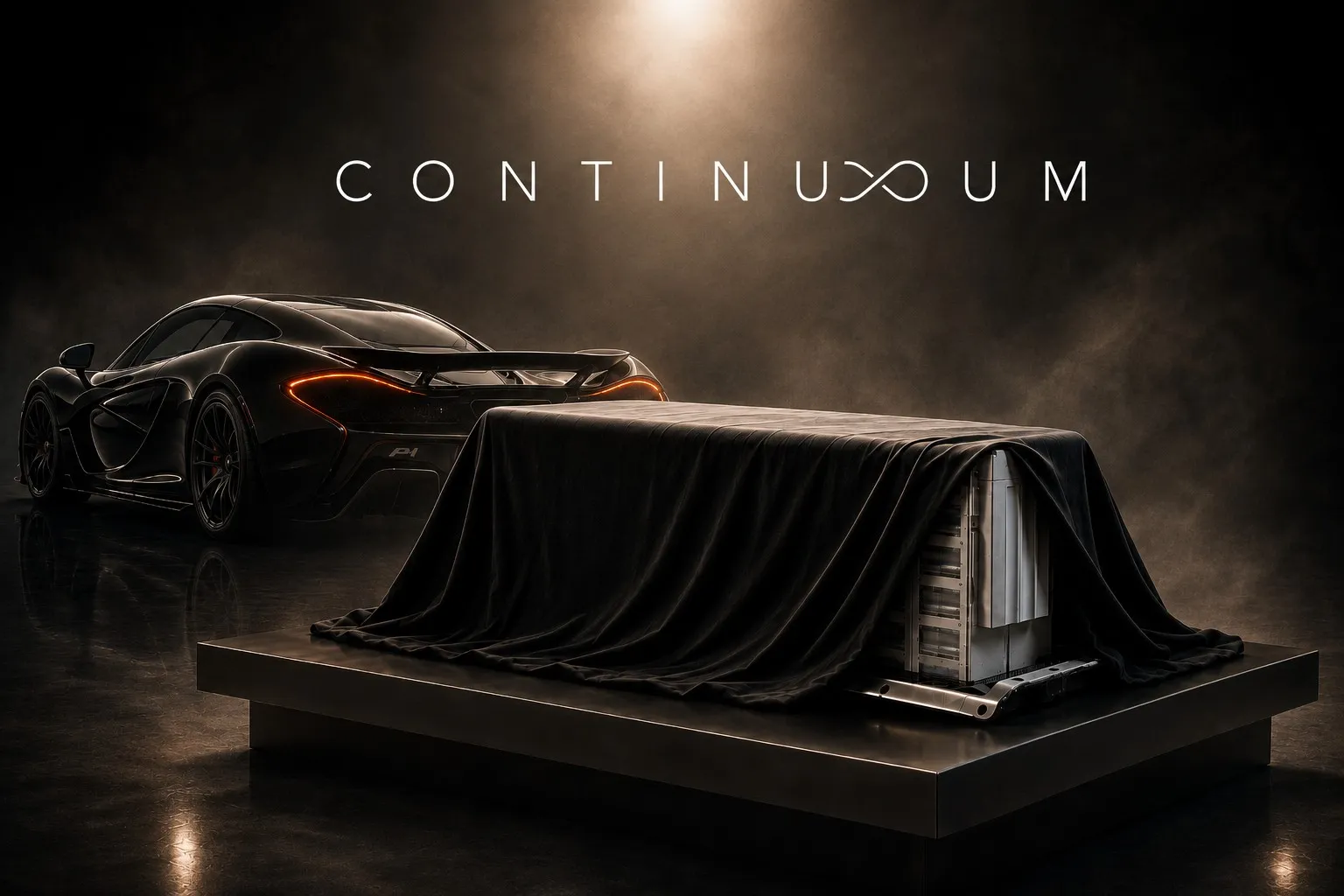

V Engineering has announced Project Continuum, a replacement high-voltage battery for the McLaren P1 that raises energy storage to 12.4 kWh from the 4.72 kWh unit fitted when the car was built. The Berkshire, England, independent McLaren specialist says the pack also removes 51 pounds (23 kg) from the weight of the original battery while extending electric range and leaving power delivery unchanged. Part of the V Group and established in 2021, V Engineering specializes in servicing current and historic McLaren Automotive models and developed Project Continuum alongside engineers who worked on the original P1 program.
Highlights
- Energy storage of 12.4 kWh, against the 4.72 kWh capacity of the factory P1 battery
- Weight reduction of 51 pounds (23 kg) versus the original unit, with no reduction in power delivery
- 21700 lithium module engineered to FIA Formula E requirements, paired with a glycol-based cooling system
- Customer installations scheduled to begin in Spring 2027, with owners in the UK and Europe, the Middle East and the United States currently in discussion
Why Are McLaren P1 Batteries Being Replaced?
The P1 was first shown as a concept at the 2012 Paris Motor Show before its debut at the 2013 Geneva International Motor Show. Production began in October 2013 and concluded in December 2015.
Manufacture of the original hybrid battery cells started in 2010, which places many packs close to 16 years of service. V Engineering reports that a number of units are now being replaced as deteriorating cells leave cars unable to be driven, and that the program is a response to global demand from owners seeking a longer-term solution. The company frames continued operation of the car as a factor in preserving P1 market values.
Inside the Project Continuum Pack
The battery is built around a 21700 lithium module that V Engineering says was engineered to FIA Formula E requirements, bringing motorsport-derived hardware into a road application. Thermal management runs on a glycol-based cooling system, and the company reports improved heat rejection from the newly developed cells.
V Engineering describes the fitment as a “Plug & Play” approach that retains compatibility with the vehicle’s existing electrical architecture. The company lists the pack’s principal attributes as:
- Increased energy storage
- Extended EV range
- Reduced weight
- Improved cooling and usability
- Plug-in and play technology
- Global support
Capacity Compared With Other McLaren Hybrid Packs
The source release positions the new unit against two reference points from McLaren’s own hybrid program.
| Battery | Energy capacity | Stated role |
|---|---|---|
| Project Continuum (replacement) | 12.4 kWh | Extended EV range and longer track sessions |
| McLaren P1 (original) | 4.72 kWh | Torque fill to eliminate turbo lag |
| McLaren Speedtail | 1.65 kWh | Short bursts of higher output to reach top speed |
According to V Engineering, the larger energy reserve allows longer track use before the battery is depleted, while the combination of added capacity and reduced mass is what produces the extended electric range over the factory unit.
What Comes Next
Customer installations are scheduled to begin in Spring 2027, with the company reporting discussions underway with owners across the UK and Europe, the Middle East and the United States. V Engineering describes Project Continuum as the first phase of a broader powertrain development program intended to provide long-term technical support to P1 owners.