
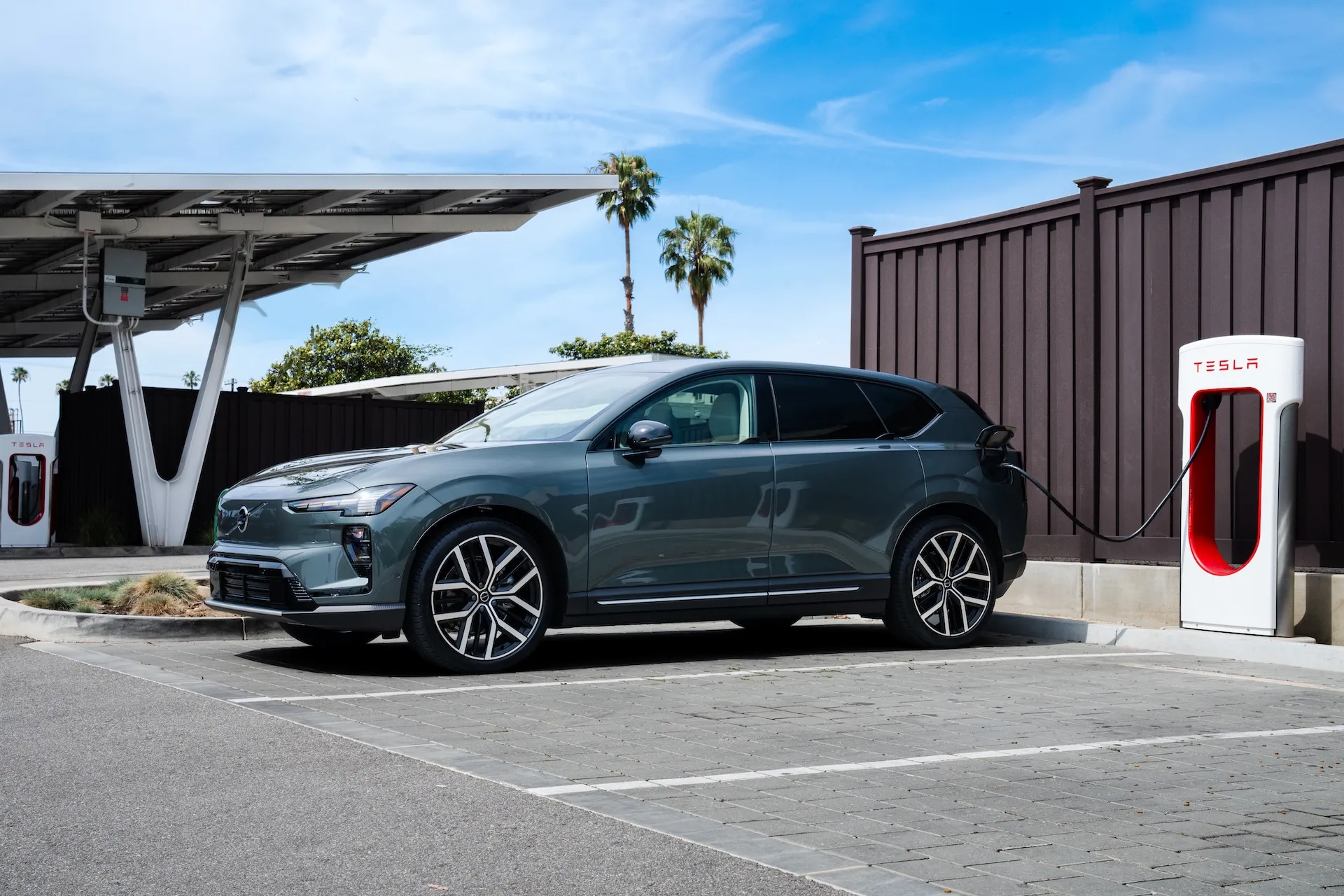
Volvo Cars will let drivers of its fully electric vehicles charge at more than 20,000 Tesla Supercharger stations across Europe starting in the fourth quarter of 2026, using the Volvo Cars app to locate stations, initiate sessions and handle payment. The expansion covers 29 European countries, with the majority of stations concentrated in Germany, France, Norway, the United Kingdom, Sweden, Italy and Spain. Volvo Cars also said it plans to transition selected models in Japan and South Korea to the North American Charging System — the NACS / SAE J3400 standard — by 2029, opening Tesla Supercharger access in those Asia-Pacific markets later this decade.
Highlights
- Q4 2026 launch adds more than 20,000 Tesla Supercharger stations across 29 European countries to the Volvo Cars app
- Coverage concentrated in Germany, France, Norway, the United Kingdom, Sweden, Italy and Spain
- Japan and South Korea targeted for NACS transition on selected models by 2029
- Volvo Cars app already supports 120,000 charging points in North America and more than 1.2 million across Europe
How the European Rollout Works
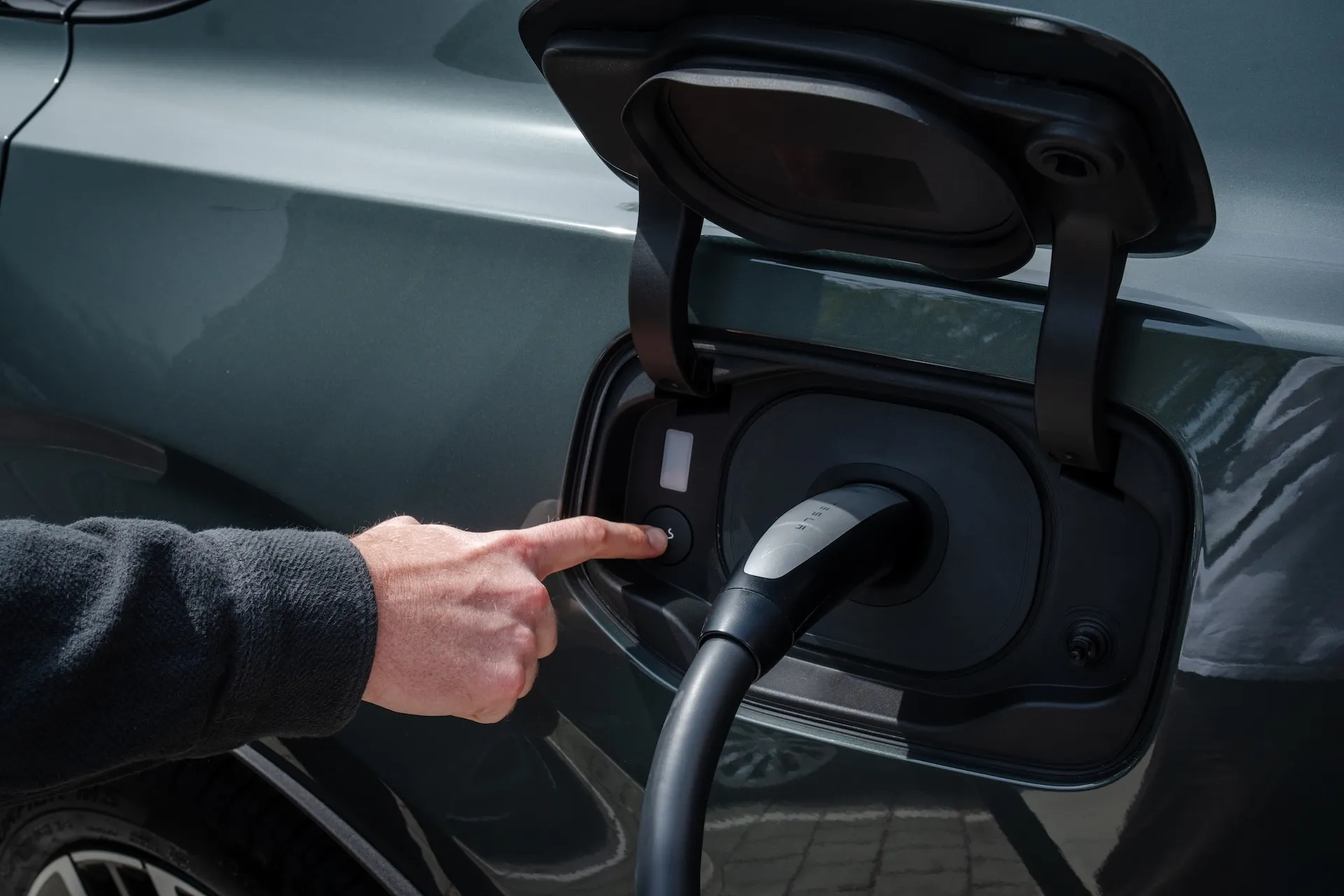
Volvo drivers in Europe will manage Supercharger sessions through the Volvo Cars app rather than the Tesla app. The company says the integration is intended to consolidate charging into a single interface for station search, session initiation and payment.
The announcement applies to Volvo’s current fully electric lineup: the EX30, EX40, EC40, EX60, EX90 and ES90. Volvo’s plug-in hybrid models are not included in the announcement.
The European Supercharger access builds on Volvo’s existing app-based footprint. Drivers already reach more than 1.2 million charging points across Europe and 120,000 in North America through the Volvo Cars app, with North American access including Tesla Superchargers via NACS adapter. The pattern mirrors a broader European charging convergence — Polestar, Volvo’s Geely-group sibling brand, integrated Tesla Superchargers into the Polestar Charge app earlier this year, reaching the same scale of more than 20,000 Tesla chargers across the region.
Which Markets Are Included?
Volvo identified 29 European countries in the rollout: Austria, Belgium, Croatia, Czech Republic, Denmark, Estonia, Finland, France, Germany, Greece, Hungary, Iceland, Ireland, Italy, Latvia, Liechtenstein, Lithuania, Luxembourg, Netherlands, Norway, Poland, Portugal, Romania, Slovakia, Slovenia, Spain, Sweden, Switzerland and the United Kingdom.
In Asia-Pacific, the company named Japan and South Korea as the markets where selected models will move to the NACS / SAE J3400 connector by 2029. Volvo said specific model and timing details for those markets will be shared at a later stage.
Asia-Pacific NACS Transition
The 2029 timeline for Japan and South Korea positions Volvo alongside several automakers shifting to NACS hardware in those markets. Volvo’s most recent North American product reflects the same direction: the brand’s newly opened-for-order EX60 is the first Volvo built with a native NACS port, giving U.S. drivers adapter-free Supercharger access.
Executive Commentary
“Volvo drivers already have access to over three million charging points globally through the Volvo app,” said Alejandro Castro Pérez, Head of Energy Solutions at Volvo Cars. “Adding Tesla Superchargers in Europe means they now have even easier access to one of the most recognised fast charging networks. As we accelerate towards full electrification, our goal is to make charging simple and effortless, through a seamless ecosystem.”
Sign up for our popular weekly email to catch all the latest EV news!