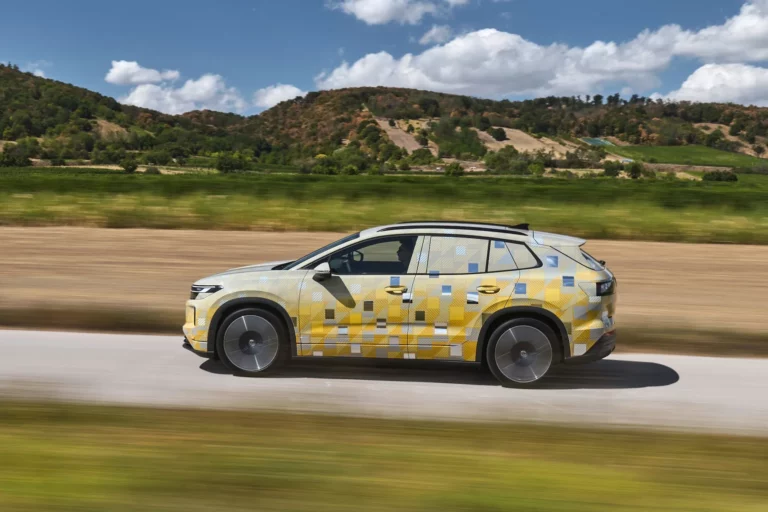

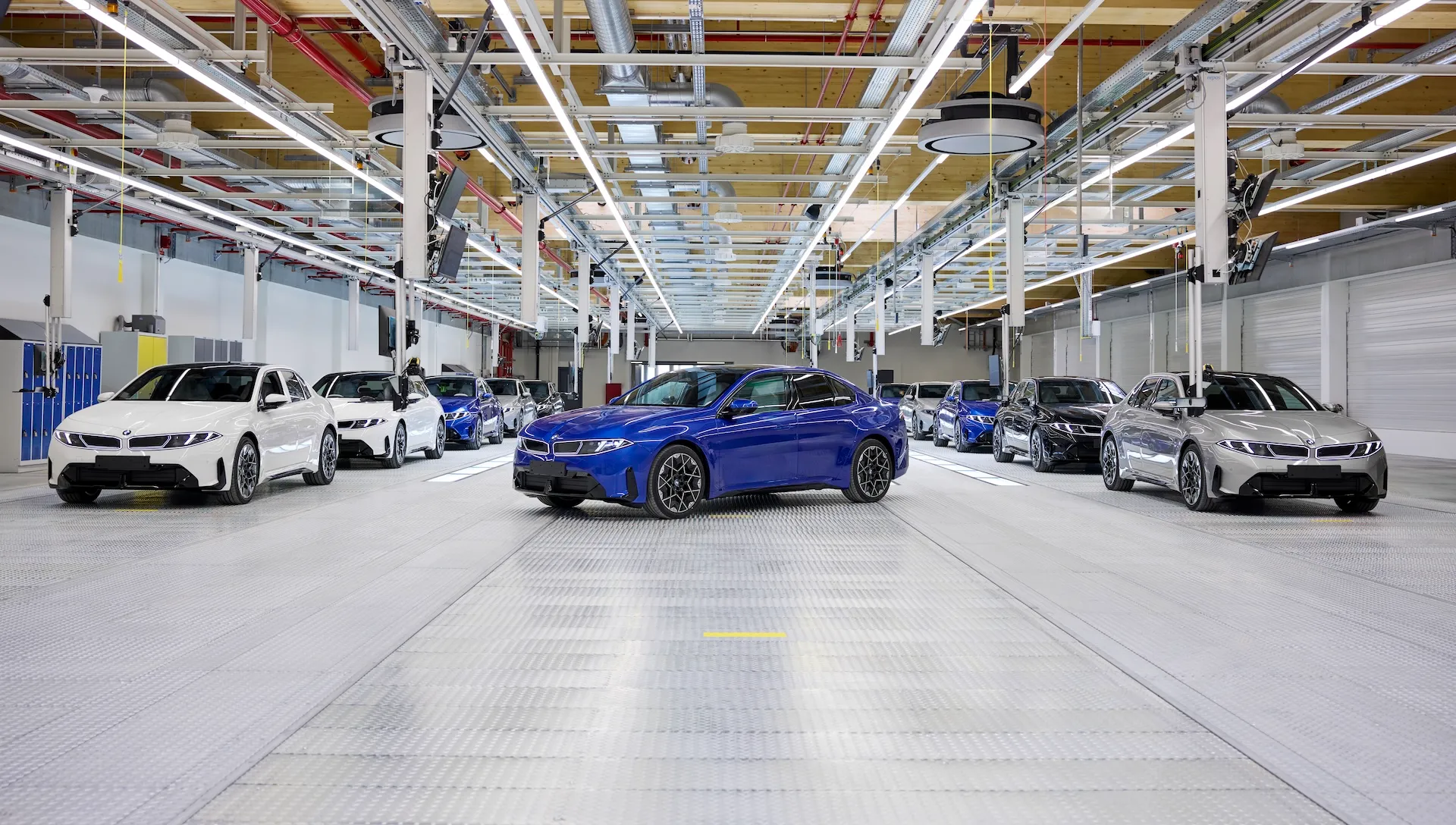
BMW Group has started series production of the fully electric i3 at Plant Munich, the second Neue Klasse model and one the company says lowers manufacturing costs at the site by a further 10%. The BMW i3 has been open for order since mid-June, and BMW reports demand strong enough to require a steep ramp-up curve at the plant. Production begins in August 2026 at the automaker’s home factory, four years after the transformation of the site started.
Highlights
- Series production of the BMW i3 starts in August 2026 at BMW Group Plant Munich, the second Neue Klasse model
- Manufacturing costs at the plant drop by a further 10% with the i3 launch, according to plant leadership
- From 2027, Plant Munich will build fully electric vehicles exclusively
- Provisional WLTP range of 471 to 567 miles (758–912 km) for the i3 50 xDrive, with energy consumption of 16.1–13.4 kWh/100 km
Strong Order Demand Sets the Ramp-Up Curve
BMW attributes the production pace to order intake that opened ahead of launch. “The models of the Neue Klasse are proving to be very popular. The second Neue Klasse model, the BMW i3, is already seeing strong demand since orders opened ahead of its launch,” said Jochen Goller, member of the Board of Management of BMW AG responsible for Customer, Brands, Sales.
Raymond Wittmann, member of the Board of Management of BMW AG responsible for Production, framed the launch around the plant’s role in the network. “The start of production of the BMW i3 heralds a new era for our main plant. With the fully-electric BMW i3, we are bringing together what belongs together: The 3 Series embodies BMW more than almost any other model – and Plant Munich represents our brand more than almost any other production site,” he said. “The unique combination of headquarters, development and production at our main plant in Munich is a key driving force for our global production network: Every one of our plants benefits from the experience and knowledge gained from the launch of the Neue Klasse in Munich.”
Costs Down Another 10 Percent
“With the start of production of the BMW i3, we are lowering manufacturing costs at Plant Munich by another 10%,” said Peter Weber, head of BMW Group Plant Munich. The company credits forward planning, cooperation with development departments and suppliers, and production technology installed within the new structures. Optimized processes, targeted automation and digitalization contribute, as does the Neue Klasse vehicle architecture itself.
Starting in 2027, the plant will produce fully electric vehicles exclusively, with further Neue Klasse models to follow. “The future viability of our plant will be ensured, above all, by the people who drive change and innovation with enthusiasm,” Weber said. “Together, we challenge ourselves every day, harnessing digitalisation and automation, and gradually making Plant Munich even more efficient – without compromising our high quality standards.”
A Plant Rebuilt During Ongoing Production
Munich has been tied to the BMW 3 Series since 1975, and more than nine million examples have left the main plant’s line since. The site was remodeled for the Neue Klasse while output of up to 1,000 vehicles per day continued. A new body shop and vehicle assembly, including logistics areas, were built across roughly a third of the plant footprint. The most recent addition is the delivery hall, still in commissioning, where vehicles undergo final customer inspections before being handed to the sales department.
The work follows the BMW iFACTORY framework, the company’s production concept built around efficiency, sustainability and digitalization, which BMW says has now been applied across all technologies at the Munich site.
Where the Batteries and E-Motors Come From
Sixth-generation high-voltage batteries for the i3 come from the newly built BMW Group Plant Irlbach-Straßkirchen in Lower Bavaria, about 90 minutes from Munich. Under a “local for local” approach, the facility supplies Munich and other German sites. BMW describes a zero-defect approach supported by continuous inline quality control, digital twins and systematic use of artificial intelligence.
The Gen6 electric motor is built at BMW Group Plant Steyr in Austria, which has manufactured drive systems for more than 40 years and now adds its first electric motor. All core components of the integrated e-drive — rotor, stator, power converter and transmission — are produced on site on new lines and in cleanroom environments. The aluminum foundry at BMW Group Plant Landshut supplies the electric motor housing to Steyr.
Provisional Range Figures
BMW lists provisional figures for the i3 50 xDrive of 16.1–13.4 kWh/100 km combined energy consumption, 0 g/km CO₂, CO₂ class A, and a range of 471 to 567 miles (758–912 km) on the WLTP cycle. The company notes actual figures depend on charging power, driving style, route, weather, auxiliary electrical loads, tires and battery state of health.
Sign up for our popular weekly email to catch all the latest EV news!