
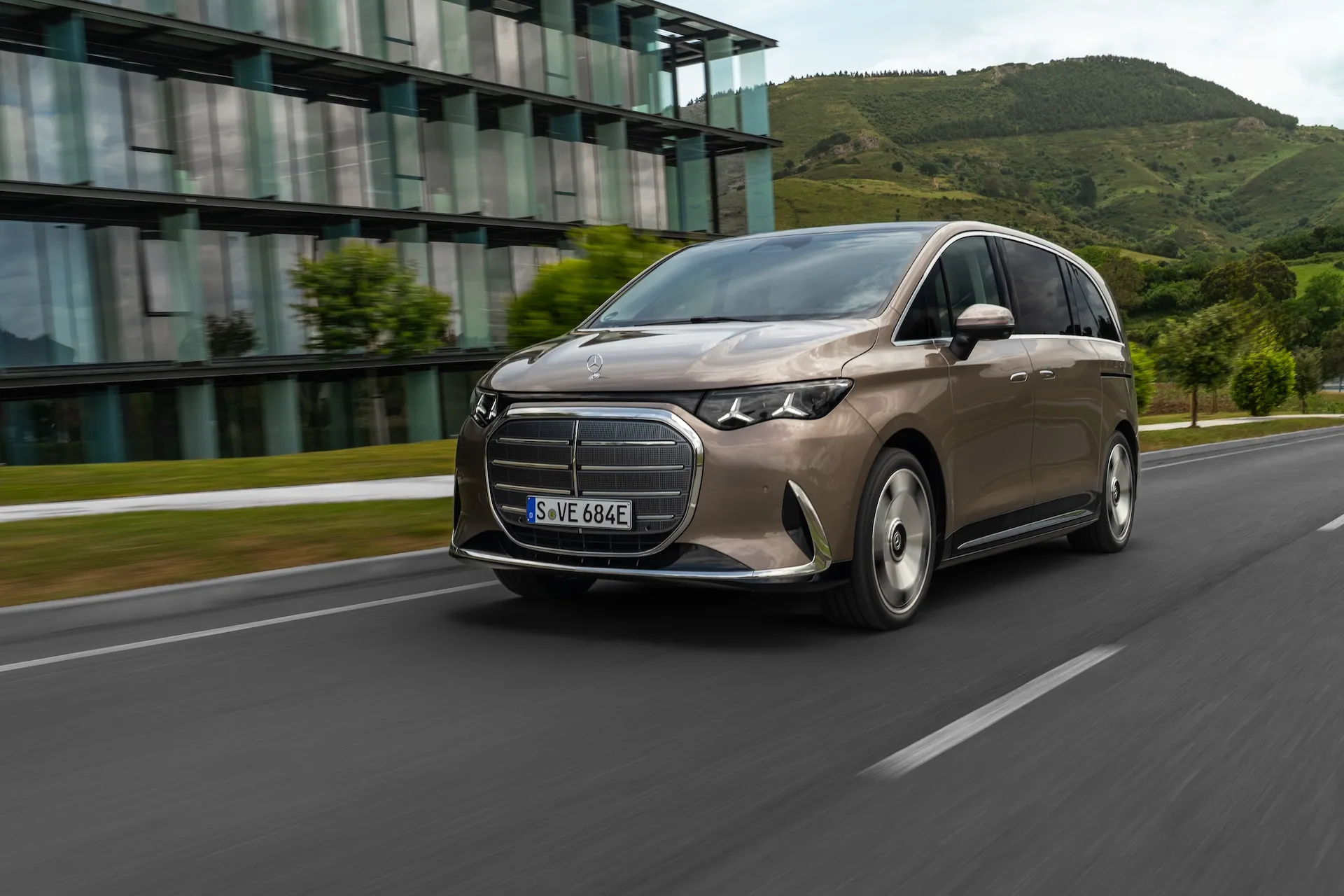
The all-electric Mercedes-Benz VLE pairs an 800-volt architecture with a 115 kWh battery and a dual-motor option, delivering a provisional WLTP range of more than 435 miles (700 km) and up to 221 miles (355 km) of range added in 15 minutes. The first variant, the 203 kW VLE 300 electric, runs a single permanently excited synchronous motor (PSM) on the front axle, while the all-wheel-drive VLE 400 4MATIC electric adds a rear motor for a combined 310 kW and a 0–62 mph (0–100 km/h) sprint of 6.5 seconds. Mercedes-Benz says both share a new nickel-manganese-cobalt (NMC) pack, with lower-cost lithium-iron-phosphate (LFP) versions at 80 kWh usable due next year. The company lists its range and consumption figures as provisional.
Highlights
- More than 435 miles (700 km) of provisional WLTP range, with up to 221 miles (355 km) recharged in 15 minutes through 800-volt DC fast charging at more than 300 kW.
- A 115 kWh usable NMC battery at launch and 80 kWh LFP variants due next year; the cell anodes mix silicon oxide with graphite, cobalt content is reduced, and the high-voltage battery is repairable.
- The VLE 300 electric uses a 203 kW front motor; the VLE 400 4MATIC pairs it with a rear motor for 310 kW, with a Disconnect Unit that decouples the rear axle to cut its drag losses by up to 90 percent.
- Factory-prepared for bidirectional charging (V2H and V2G) in every market, with the bidirectional MB.CHARGE Home Pro Intelligent wallbox arriving in 2026.
A Dual-Motor Drivetrain Tuned for Efficiency
Mercedes-Benz developed the VLE’s drive unit in-house, with a permanently excited synchronous motor on the front axle. All-wheel-drive models add a second PSM at the rear that works as an on-demand boost. A Disconnect Unit decouples the rear motor and part of the gearbox when traction and power demand are low, which the company says cuts rear-axle drag losses by up to 90 percent and extends range. The power electronics use a silicon carbide inverter for more efficient energy use, and the motors combine a double-V rotor-magnet layout with chorded stator windings for quiet, efficient running. Across the lineup, Mercedes-Benz reports combined energy consumption below 20 kWh per 100 km.
The VLE 300 electric leads the range at 203 kW, while the VLE 400 4MATIC electric follows later this year as the performance flagship at 310 kW, reaching 62 mph (100 km/h) from rest in 6.5 seconds.
“The all-new electric VLE is a genuine gamechanger. With seven-degree rear-axle steering and AIRMATIC air suspension it handles like a compact car and rides like a true premium limousine. And with more than 700 kilometres of range and up to 355 kilometres recharged in 15 minutes, the VLE redefines what everyday electric mobility can mean for a vehicle of this size,” said Andreas Zygan, Head of Development, Mercedes-Benz Vans.
800-Volt Charging and the 115 kWh Battery
Both launch models use a new NMC battery with 115 kWh of usable capacity. The cells use anodes that blend silicon oxide with graphite, and Mercedes-Benz says cobalt content has been further reduced. The high-voltage battery is repairable, and its electronics unit is accessible and replaceable in the workshop. Two LFP-cathode models with 80 kWh of usable capacity follow next year.
The 800-volt system supports DC fast charging at more than 300 kW, which the company says adds up to 221 miles (355 km) of range in 15 minutes. A DC converter is available as an option for charging at 400-volt stations, while AC charging runs at 11 kW or an optional 22 kW. Mercedes-Benz puts total WLTP range at more than 435 miles (700 km) for the VLE 300 electric. WLTP figures, measured on Europe’s test cycle, typically read higher than the U.S. EPA estimates. As a real-world demonstration, the company says a VLE covered the nearly 680-mile (almost 1,100 km) trip from Stuttgart to Rome with only two 15-minute charging stops.
Ride and Handling: AIRMATIC and Rear-Axle Steering
The VLE rides on AIRMATIC air suspension with level control, which maintains constant ground clearance regardless of load and damps each wheel independently. Above 68 mph (110 km/h) the system automatically lowers the body by about 0.6 inch (15 mm) to reduce drag and improve stability, and ride height can be raised or lowered by up to 1.6 inches (40 mm) for ground clearance or easier entry.
Seven-degree rear-axle steering gives the VLE a 35.8-foot (10.9 m) curb-to-curb turning circle. Below 37 mph (60 km/h) the rear wheels steer opposite the fronts to shorten the effective wheelbase and tighten maneuvers; above that speed they steer in the same direction to lengthen it for high-speed stability. A more direct steering ratio also reduces the number of turns lock to lock.
Can the VLE Power Your Home?
The VLE is factory-prepared in every market for bidirectional charging, allowing it to feed energy back to a home (V2H) or the public grid (V2G) rather than only drawing power. Mercedes-Benz says stored solar energy can offset household consumption during high-price periods and that the vehicle can supply critical home loads for several days during an outage, given the required bidirectional DC wallbox and supporting equipment. The MB.CHARGE Home Pro Intelligent wallbox, arriving in 2026, adds automated scheduling that charges when power is cheap and discharges to the grid when prices are high. On the public side, MB.CHARGE Public integrates more than 3 million charging points and over 1,500 providers into the MBUX head unit and the Mercedes-Benz app.
“With the all-new VLE, we are redefining electric mobility for families, businesses and leisure-active customers alike. Our Grand Limousine for up to eight people is exceptionally spacious, intelligent, efficient and delivers impressive agility and long-distance comfort. The VLE is perfectly designed around real customer needs – and engineered to further exceed their expectations,” said Thomas Klein, Head of Mercedes-Benz Vans.
Sign up for our popular weekly email to catch all the latest EV news!