
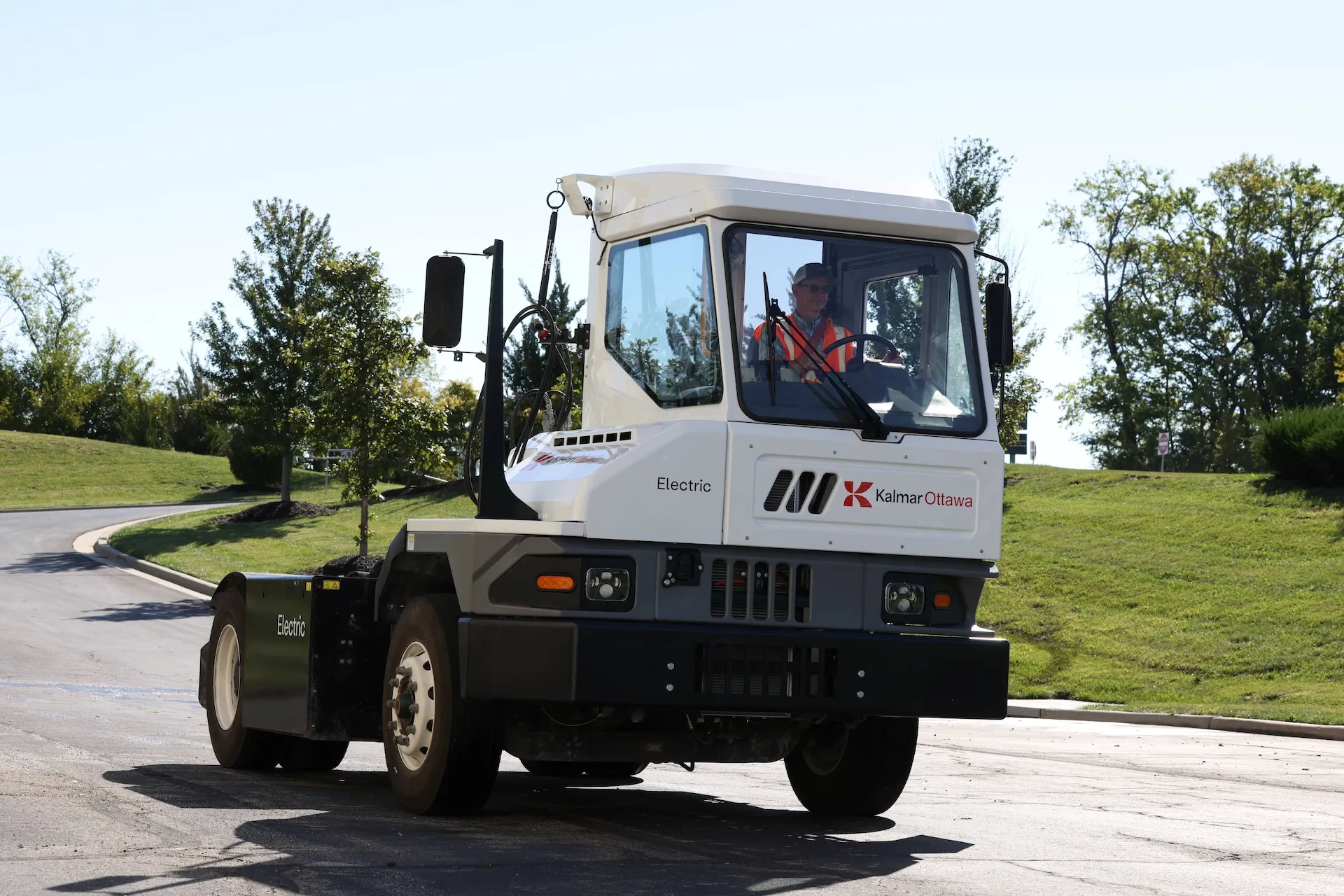
WTC Group has ordered Kalmar Ottawa T2 EV terminal tractors for its Canadian yard operations, using the iMHZEV (Incentives for Medium- and Heavy-Duty Zero-Emission Vehicles) grant program to support the purchase. The logistics and terminal services provider is integrating the T2 EV electric terminal tractor into a fleet that operates in what Kalmar describes as high-demand environments. Kalmar announced the order this week and framed it as evidence of commercial momentum behind zero-emission yard equipment in Canada. The company did not disclose the number of units ordered or a delivery timeline.
Highlights
- WTC Group’s order was supported through the iMHZEV grant program, which Kalmar credits with making the transition economically and strategically viable.
- The T2 EV uses the same cab controls as the diesel T2, allowing operators to move between the two without additional training.
- Kalmar Ottawa says the T2 EV is the most extensively tested product it has released.
- Kalmar Ottawa has supplied diesel yard spotters since 1958 and designs, manufactures, and supports the T2 EV in Ottawa, Kansas.
Same Cab Controls, Different Powertrain
The T2 EV carries over the cab controls from the diesel T2 terminal tractor, a decision Kalmar says lets operators switch between the two configurations without additional training or workflow disruption. That continuity matters in shunting operations, where drivers frequently rotate across equipment during a shift.
Kalmar says it spent years engineering, testing, and refining the vehicle to meet the same standards as its diesel predecessor, and characterizes the T2 EV as the most extensively tested product the company has ever brought to market. The company has built diesel yard spotters — known across the industry as terminal tractors, yard goats, or shunt trucks — since 1958.
Why Are Yard Spotters Suited to Electrification?
Kalmar points to the duty cycle. Yard spotters work in controlled environments with predictable routines and generally stay near their charging infrastructure, which removes the range and infrastructure constraints that complicate over-the-road electrification. According to the company, the T2 EV is built to deliver consistent performance across a full shift while supporting fast charging strategies.
That profile has made terminal tractors an early proving ground for heavy-duty battery-electric equipment in distribution centers, ports, and intermodal yards across North America.
Early Field Feedback
Kalmar reports that operators have cited smooth acceleration, lower noise levels, and an improved driving experience, while fleet managers have pointed to reduced maintenance requirements and the removal of diesel fuel costs. The company says these translate into higher fleet uptime and lower total operating costs for WTC Group. Kalmar did not provide quantified uptime, maintenance, or cost figures to support the claims.
“Innovation has always been central to WTC Group’s operations. As customer demand for sustainable logistics solutions continues to grow, investing in electric terminal tractors is a natural step in improving both operational efficiency and environmental performance,” said Brad Gordon, Director of Maintenance, WTC Group.
Vertically Integrated Production
The T2 EV is designed, manufactured, and supported out of Kalmar Ottawa’s Ottawa, Kansas operation. The company says the localized structure gives it tighter control over production and service, and supports faster response times and parts availability for customers — a factor Kalmar cites as relevant to fleets committing to electric yard trucks at scale.
“Kalmar Ottawa has spent years developing the T2 EV to ensure when we came to the market with an EV yard spotter, we would have the best EV truck in the market to match the reputation Kalmar has established with its legendary T2 diesel terminal tractor that our customers have come to recognize,” said James Leibold, Zero Emissions Vehicle Sales Manager, Kalmar.
Sign up for our popular weekly email to catch all the latest EV news!